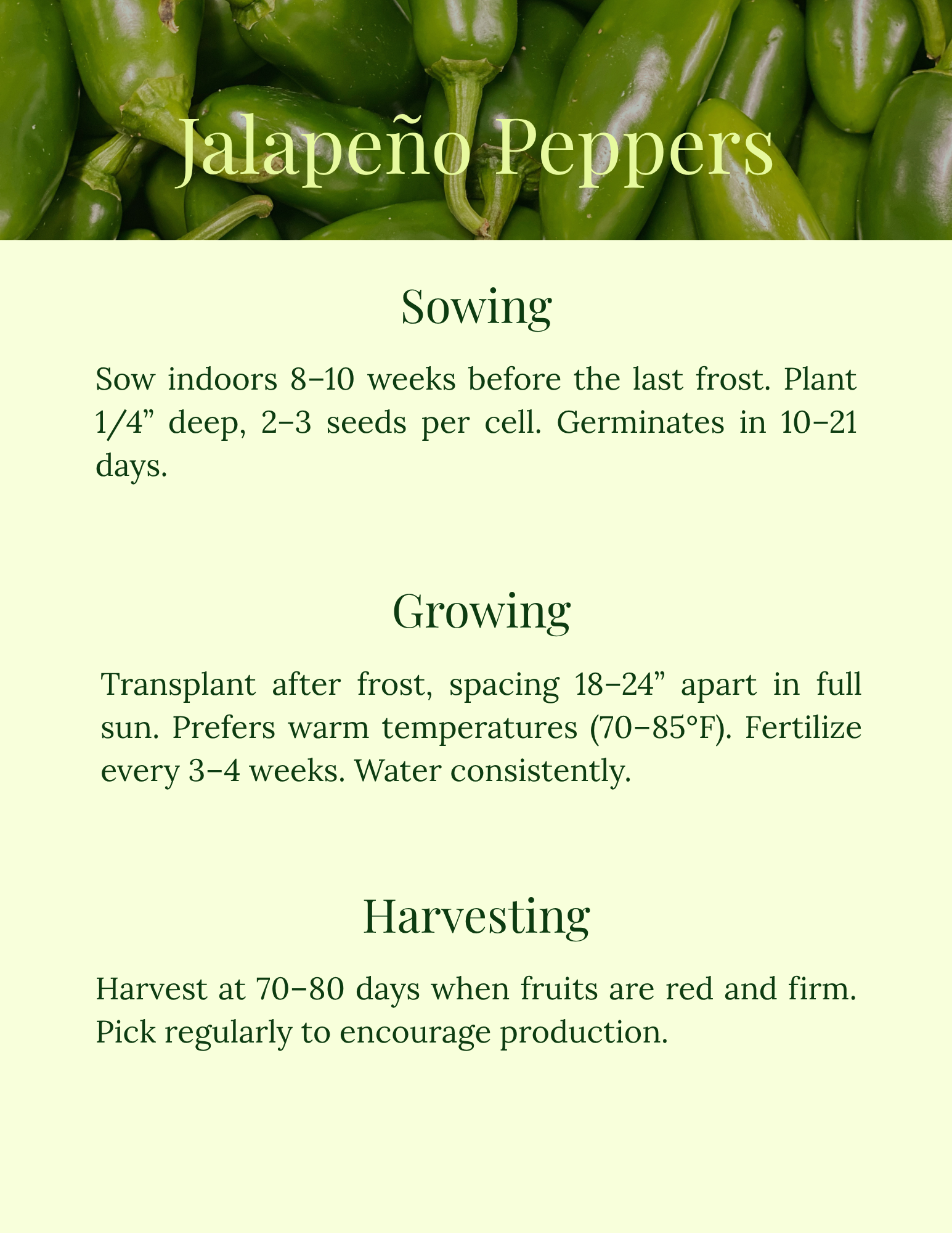
Jalapeño Peppers
Sowing
Start Jalapeno M hot pepper plant seeds indoors in peat pots about 8 weeks before the last expected spring frost. Sow them 1/4″ deep and keep the soil at 80-85 degrees F until germination; provide sunlight or a grow light for 12-16 hours a day. When the outdoor temperature reaches 60-65 degrees F during the day and no less than 50 degrees F at night, transplant the seedlings 12-16″ apart. Exposing the plants to the weather for several hours a day before transplanting may help prevent shock. Peppers also grow well in containers or raised beds.
Growing
Keep the soil evenly moist and weeds under control; mulching the plants may help with this. If excess heat and sun cause the plants to wilt, provide shade.
Harvesting
Harvesting hot peppers is basically a matter of personal preference. Generally, the longer the peppers mature on the vine, the hotter they will taste. Mature peppers, however, signal the plant to stop producing; if the peppers are picked when still at the green stage, the plant will go on producing. Always use a knife or scissors to remove peppers to prevent damage to the fragile stems. Jalapeno peppers produce an extended harvest.
Seed Saving
Keep in mind that peppers will cross pollinate with other varietes of pepper, so isolation or caging may be necessary to preserve genetic purity. Allow the pepper to fully mature, than cut it open and remove the seeds. Spread out the seeds to dry for about two weeks. Store Jalapeno M hot pepper plant seeds in a cool, dry place for up to two years.
Common Pests
Cutworms: They are among the most inefficient eaters in the insect world. A few bites and they are done, which means a single cutworm can kill a dozen plants in a few days time. Fortunately this damage is easily preventable, when you transplant the seedlings, encircle them with a protective collar made from a paper cup with the bottom punched out. Another method is to stick a toothpick or twig down the side of the plant stem. When the cutworm attempts to encircle the stem to girdle it, the tough wood gets in the way.
Blister Beetles: Here is an insect that has the dubious honor of being both a valuable beneficial and a horrible pest. The larvae feed on grasshopper eggs, but the adults feed on tomatoes, chard, and many others vegetables and flowers. When you notice blister beetles gently shake the plant being eaten, the beetles will drop down and run for cover under the leaves. Wear gloves when handpicking, as squashed specimens will leave blisters on your hands. The oldest remedy, used when the beetles appears in hordes, is to drive them out with cedar or pine branches.