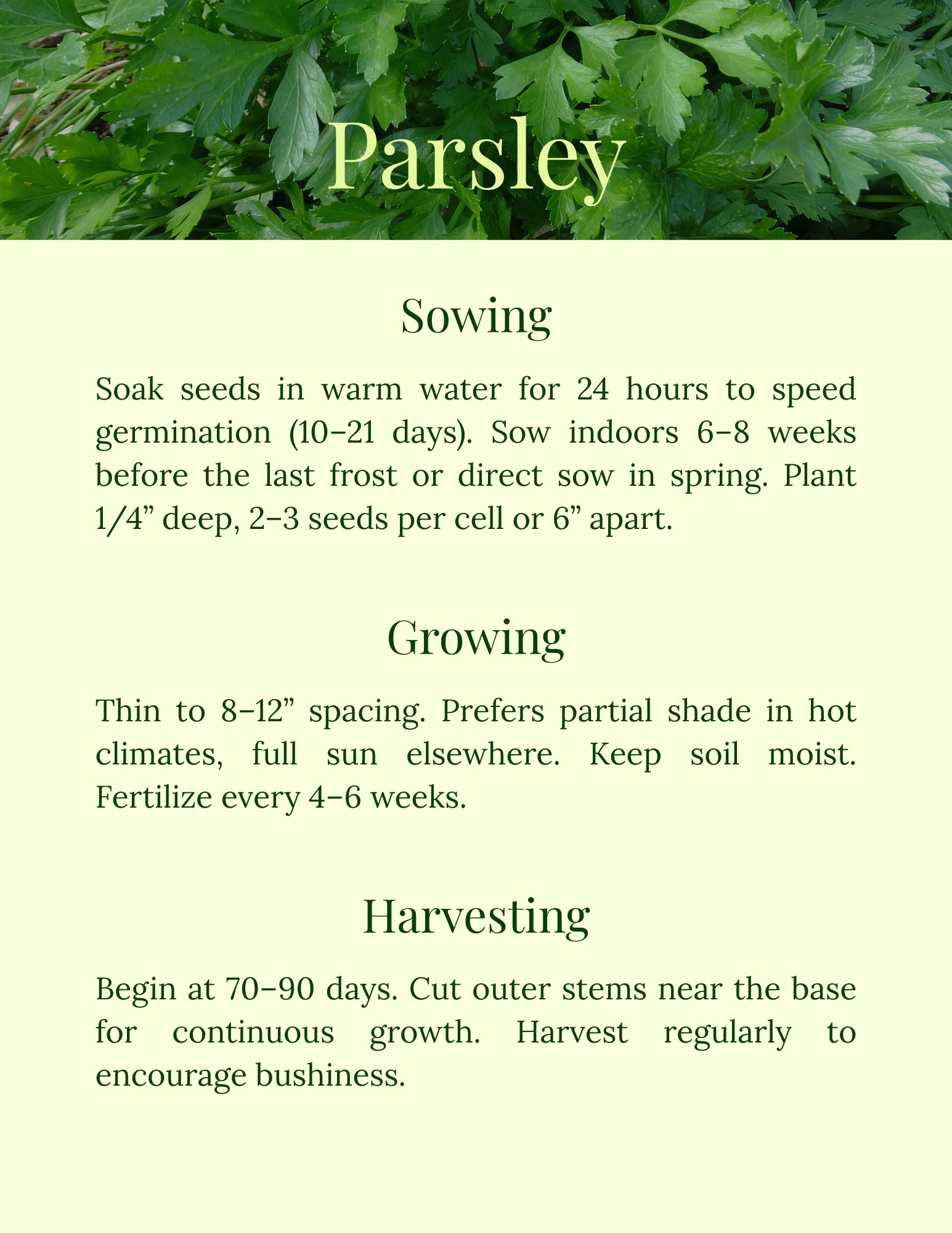
Parsley
Sowing
Most gardeners sow Flat Leaf parsley seeds indoors to give the plants a head start; soak the seeds overnight, then plant them 1/4″ deep and keep them at 65-70 degrees F. Because parsley has a notorious habit of slow germination, don’t expect to see sprouts for 3-5 weeks. Keep the soil evenly moist. Transplant the seedlings when the average outdoor soil temperature reaches 60 degrees F, spacing them 6″ apart in full sun or partial shade. Parsley also grows well as a container plant.
Growing
Parsley has shallow roots, and should not be allowed to dry out for long. Mulch to help conserve moisture and control weeds.
Harvesting
Harvest the leaves as needed, taking the large outer leaves first and removing at least 10″ of stem with the leaves to keep the plant healthy. The whole plant can be harvested at once, cutting it off just above ground level; more leaves will grow. Use immediately or freeze to preserve freshness.
Seed Saving
Though most varieties of parsley can survive below zero temperatures when mulched well, another method of overwintering is to dig up the entire plant, cut down the stems to 1″, and plant it in sand; keep it in a 32-40 degrees F location until spring replanting. Watch the developing Single Leaf Parsley herb seeds heads carefully, since they tend to shatter easily; pick each one as it becomes dry and mature. Additional drying time may be needed. Clean Single Leaf Parsley herb seeds by rubbing the heads through a screen or shaking them. Store Flat Leaf parsley seeds in a cool, dry place for up to 4 years.
Common Pests
Parsley Worms: Also known as the black swallowtail butterfly, it is an exception to the rule that pretty butterflies do not damage gardens. These larvae may occasionally be so numerous on large plantings of parsley that hand picking would be impractical. In that case, the definitive control agent is Bt (Bacillus thuringiensis), applied when the worms are young.