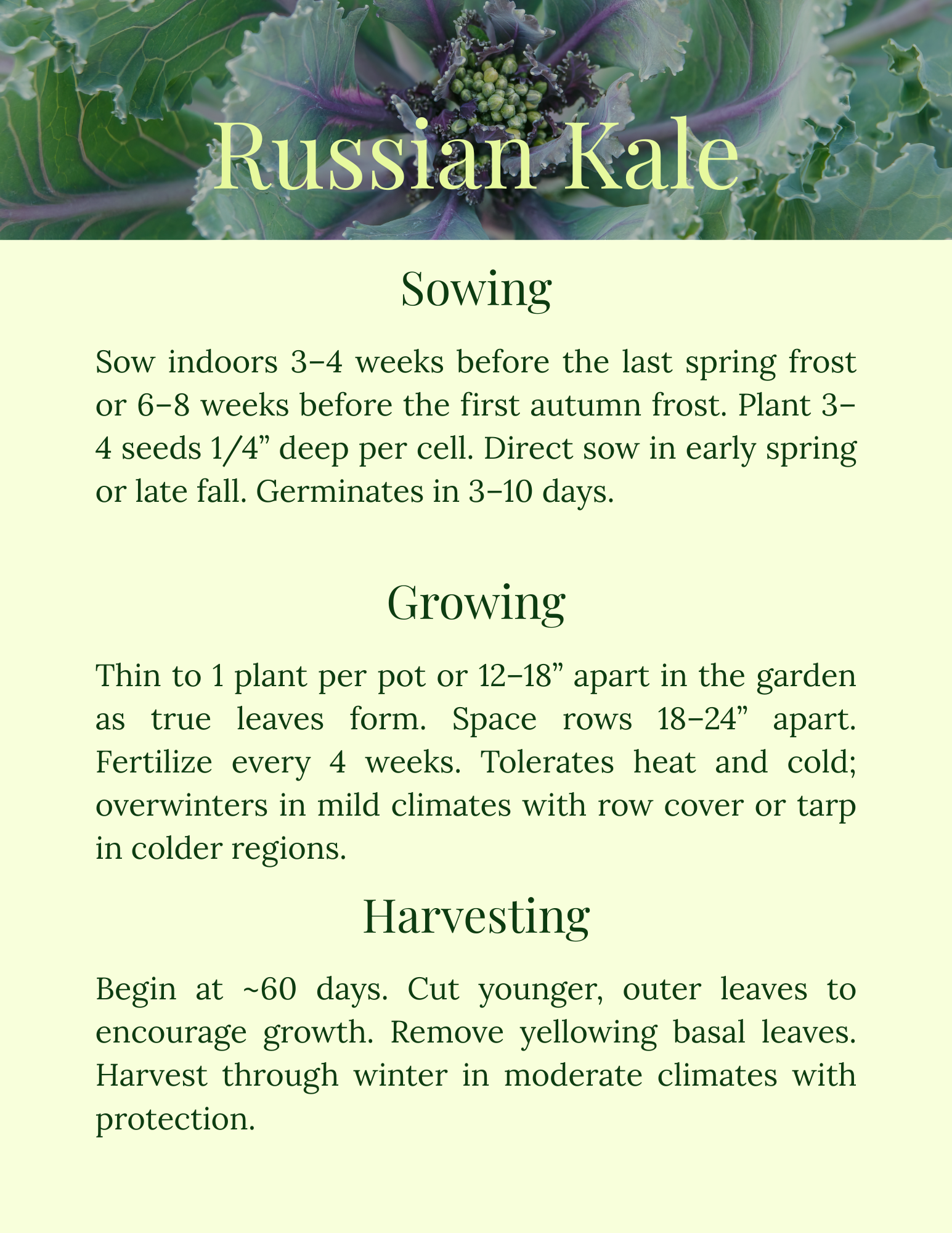
Russian Kale
Sowing
Since kale thrives in cool weather and sweetens with frost, it grows best as a fall crop. For an earlier crop in areas with a cool summer, sow the red Russian kale seeds in early spring; plant three seeds in a cluster, 1/2″ deep and 16-18″ apart in rows 2-3′ apart. Thin the clusters to the strongest plant when the seedlings emerge. Kale appreciate very rich, moist soil that drains well, since they taste best when allowed to grow quickly. For a fall crop, plant the red Russian kale seeds in the same way about three months before the first expected frost. For companion planting benefits, buy these kale seeds and plant them with cabbage or potatoes.
Growing
Keep weeds controlled and conserve moisture by applying mulch. Keep the soil evenly moist, but stop watering after the first frost. Red Russian kale survives cold temperatures up to -10 degrees F.
Harvesting
Harvest baby leaves as soon as they grow big enough for salad; harvest bigger leaves as needed. Use a scissors or a knife to cut the leaves, to avoid tearing the stems. To harvest the entire plant, cut it off an inch above ground level. To make the fresh leaves last longer in the fridge, dip the stems in water after cutting them; they should stay fresh for up to a month. Kale also freezes well. Expect to harvest well after frost, since most varieties of kale can survive freezing temperatures.
Seed Saving
Since kale will cross pollinate with other members of the cabbage family such as broccoli, cauliflower, and collards, be sure to isolate it to preserve genetic purity. Kale must overwinter before producing seed; since it survives cold well, a thick layer of mulch should protect it sufficiently even in colder climates. In the spring, allow it to flower and go to seed. Some of the leaves can still be harvested for eating without damaging the seed development. The tall stalk will develop pods that ripen from the bottom up; wait until the pods turn light brown before harvesting them. Another method is to pull the entire plant when most of the pods have turned brown, and hang it upside down in a warm, dry place. Thresh the seeds by crushing the pods and sifting out the chaff. Store red Russian kale seeds in a cool, dry place for up to 4 years.
Common Pests
Aphids: The common name for many species of aphids that infect gardens is plant lice, as that is exactly what they look like. Aphids sucks plant juices, weakening the leaves and the stems. Fortunately there are a dozen major predators to every type of aphid. The most common predator are the lady beetle, small wasps, syrphid fly larvae, and lacewings. Most of the time insecticide is not needed for removing aphids, a strong stream of water from the hose will do just fine, as will soapy water.
Cabbageworms: Cabbage worms feed on the leaves of cabbage, broccoli, Brussels sprouts, collards, cauliflower, kale and other leafy greens. Cabbageworms have tiny feet all along their bodies, they are a small pale yellow to white moth, which uses camouflage as its main means of defense. Floating row covers provide an effective control. When necessary, preform Bt (Bacillus thuringiensis) treatments weekly until the caterpillar population is under control.