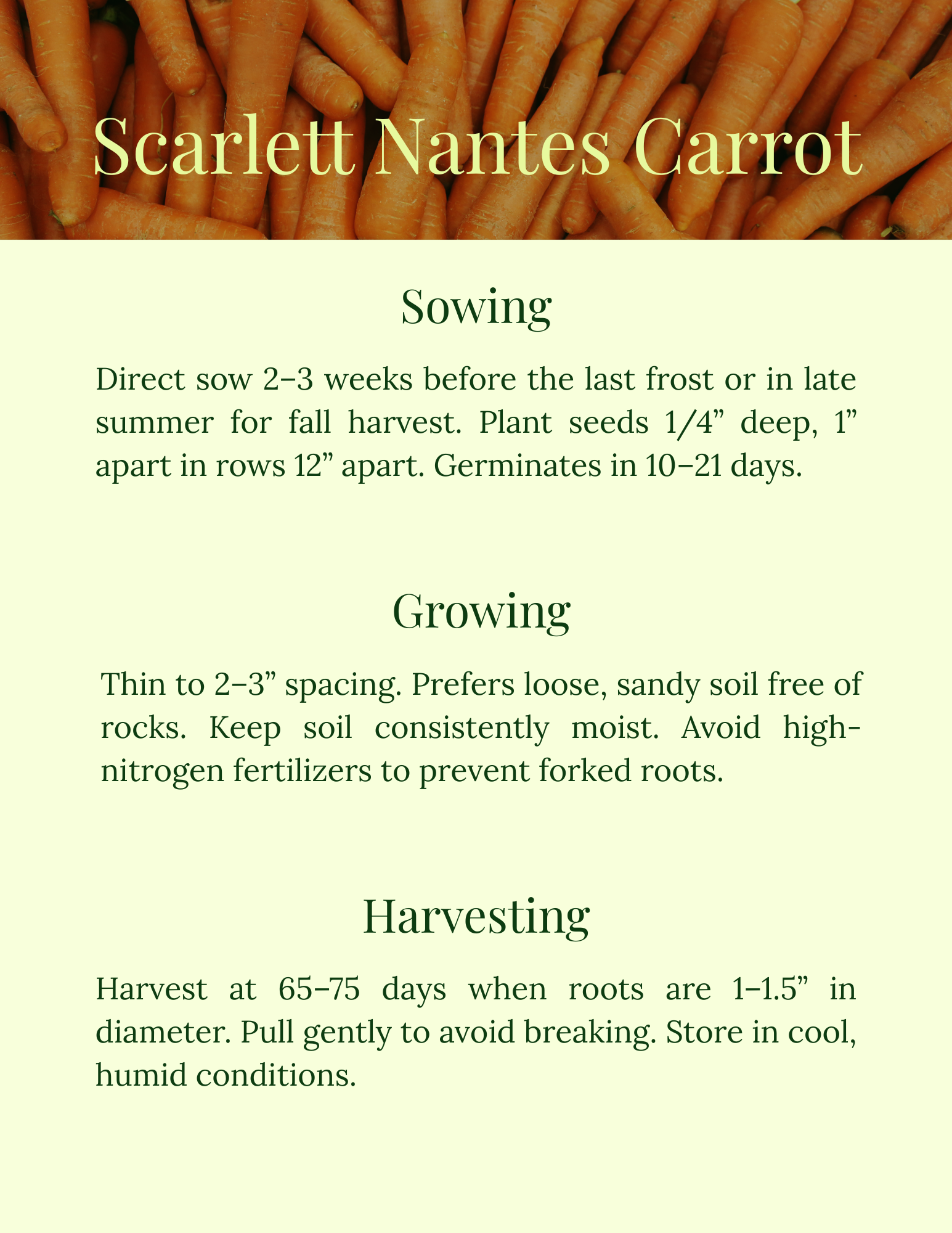
Scarlett Nantes Carrot
Sowing
Prepare the soil 3 weeks before the last expected spring frost or when the soil temperature reaches 45 degrees F. These long, slender carrots appreciate deeply worked, loose soil in order to reach their full length. Build up a raised mound in the row, about 8″ wide; sow the Scarlet Nantes carrot seeds on it, and cover them with 1/4″ very loose soil. Keep the soil moist, but do not allow the the area above the seeds to become hard – this may prevent the seeds from germinating. In cooler climates, sow more seeds every 3-6 weeks for a continuous crop. Warmer climates may be restricted to spring and fall crops, since carrots cannot tolerate an excess of heat. For companion planting benefits, plant the Scarlet Nantes carrot seeds for sale with aromatic herbs or onions; this will repel the carrot fly and its maggots.
Growing
When the seedlings reach 2″ high, gently thin them to 2-4″ apart, depending on desired carrot size. The farther apart they are, the bigger they will grow. Do not allow the soil to dry out. When the tops of the carrots begin to emerge from the soil, cover them with mulch to keep them tender. Keep weeds under control to prevent the young carrots from being stunted.
Harvesting
Begin gathering baby carrots when grow big enough to eat, to allow the remaining carrots to reach a larger size. Scarlet Nantes is one of the best carrots for juicing. If the carrots become difficult to pull, make sure the ground is moist. To store carrots for the winter, twist off the tops but do not wash them. Layer them in damp sand or sawdust. In warmer climates, leave the carrots in the garden over winter topped with a thick layer of mulch
Seed Saving
Because carrot varieties will cross pollinate with each other as well as with wild carrots, isolate the plant for seed at least two miles from other varieties or provide a protective cage. In areas where the ground freezes over winter, it will be necessary to dig up the carrots before the first heavy frost; twist off the tops and store the carrots at 35 degrees F in damp sand or sawdust over winter, making sure the roots do not touch. Plant them again in the spring. From 30-40 carrots should be harvested to preserve genetic diversity. In warmer climates, leave them in the ground and cover them thickly with mulch over winter. In the spring, allow the top of the plant to flower; when they grow brown and dry, cut them off and allow them to fully dry. Clean to remove as much chaff as possible, then store in a cool, dry place for up to three years.
Common Pests
Aphids: The common name for many species of aphids that infect gardens is plant lice, as that is exactly what they look like. Aphids sucks plant juices, weakening the leaves and the stems. Fortunately there are a dozen major predators to every type of aphid. The most common predator are the lady beetle, small wasps, syrphid fly larvae, and lacewings. Most of the time insecticide is not needed for removing aphids, a strong stream of water from the hose will do just fine, as will soapy water.
Carrot Rust Fly: The adult is a small, long legged black fly with a yellow head. This pest usually overwinters as a tiny brown pupal case buried in the soil. In late spring, adults emerge and lay their eggs around the base of carrots, celery, parsnips, and related crops. Badly riddled plants wilt because of their injured roots can not keep them adequately supplied with water. Keep the area around your plants dusted with wood ash to deter egg laying and use hot pepper powder as a deterrent.