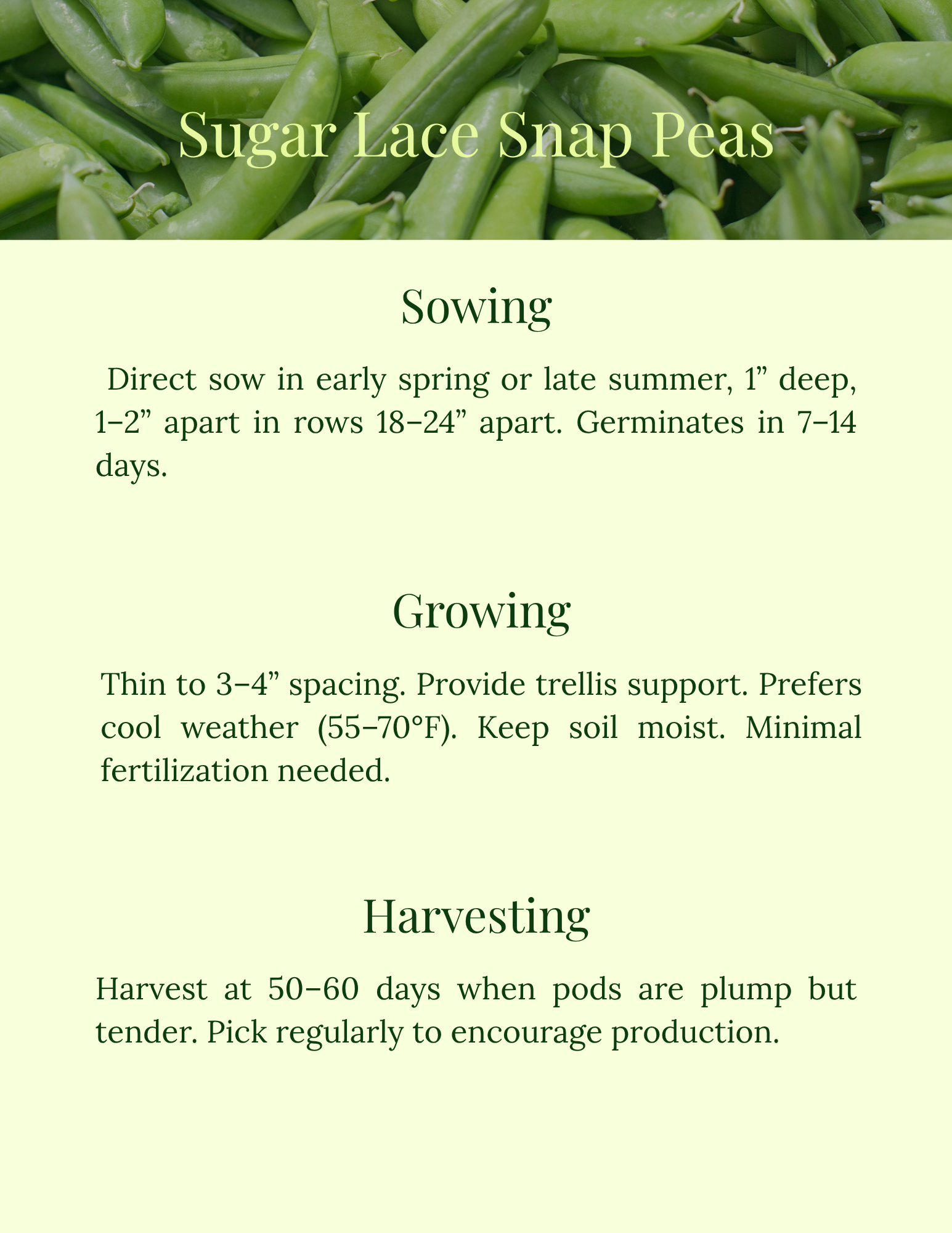
Sugar Lace Snap Peas
Sowing
Because peas thrive in cool weather and do not transplant well, they should be planted outside 4-6 weeks before the last frost or when the average soil temperature reaches at least 40 degrees F. If planting later, remember that most peas won’t tolerate weather above 75 degrees F. If planting peas in your soil for the first time, keep in mind that a powder inoculant of beneficial bacteria should coat the seeds. Plant the peas 2″ apart and 2″ deep in light soil and full sun. For an early spring crop, plant in the same manner in the fall. Peas do not do well when planted near onions or garlic.
Growing
Before they bloom, pea plants need to be kept moist but not wet; after blooming, slightly increase the watering. Remove weeds carefully to avoid disturbing the plants; mulch may be helpful to conserve moisture and control weeds. Sugar Lace peas resist Powdery Mildew, Bean Leaf Roll Virus, and Pea Enation Mosaic Virus..
Harvesting
Snap peas taste best when harvested as soon as both the pod and the peas are filled out; test their ripeness by breaking them in two. If they snap cleanly, they are ready to harvest. Sugar Lace pea vines are nearly leafless for ease of harvesting.
Seed Saving
To save seed from garden peas, let the pods mature fully on the vine; they will turn brown, and the peas should rattle inside when they have dried completely. Pick them individually, or pull the entire plant and hang it upside down in a warm, dry location to finish drying. Shell the peas after 1-2 weeks of drying. Store the seed in a cool, dry place for up to three years.
Common Pests
Leafhoppers: These tiny insects are very small, greenish wedge-shaped insects that hop about wildly when disturbed. Leafhoppers cause a conditions called hopperburn, where the leaf tips turn brown and die. This occurs when the nymphs and adults feed. If hopperburn is in progress, stop the damage with soap. First rinse the underside of the plant leaves with water then apply an insecticidal soap.
Tarnished Plant Bugs: A wide ranging enemy of most fruit and vegetable crops, the tarnished plant bug has the ability to inject toxins into leaves and stems as it feeds. This can lead to unusual discolored dark spots on strawberry, celery, chard, beets, and related plants, which are probably its favorite foods. A true bug with a round back and tiny head, they are usually green to brown with darker markings on its back. Sabadilla dust easily kills tarnished plant bugs, it should be applied in the cool mornings before the bugs are active.